According to the CDC, the amount of air required to be delivered to any given indoor space is based upon the number of people occupying the space, the equipment present, and the total size of the space. Proper ventilation is absolutely essential, and when an indoor space is used differently than the original intent, your HVAC system may need to be modified to properly monitor the space. For example, if a storage room is modified into a boardroom or designated eating space, the HVAC system monitoring and ventilating this space will likely need to be modified to accommodate the room’s new purpose.

When it comes to HVAC systems monitoring indoor air quality it is necessary to reduce pollution levels that can be released by any equipment, building materials, furnishings, products, and of course, people. Given that humans exhale CO2, the levels of CO2 will increase during the time the room or building is occupied, and therefore needs to be regularly monitored to ensure sufficient levels of outdoor air is being introduced into the occupied space to keep CO2 levels appropriate. ASHRAE has a detailed explanation of ventilation for acceptable indoor air quality here.
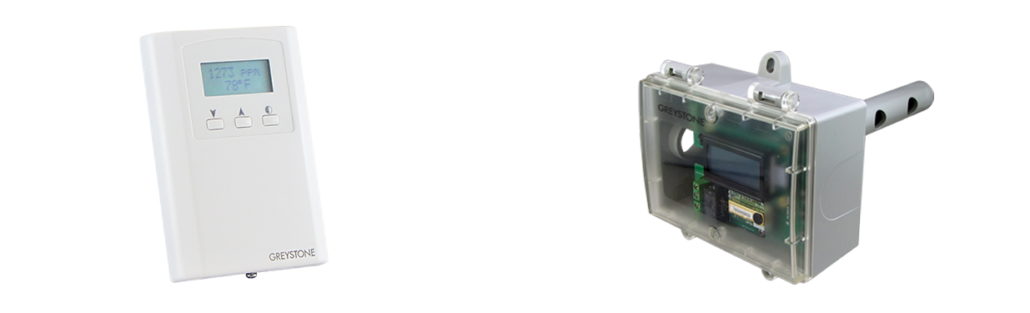
Greystone’s line of Carbon Dioxide Transmitters (CE & CD2 Series) are an excellent way to monitor CO2 levels within an occupied space. Available in both duct or wall mount models, both the CE and CD2 series utilize a highly accurate dual channel non-dispersive infrared (NDIR) sensor with a measurement range of 0-2,000 ppm and adjustable to 10,000 ppm on some models. Additional options such as temperature sensor, manual override, setpoint control or adjustable alarm relay allow for more application flexibility. To find out more about Greystone’s line of Carbon Dioxide Transmitters click here.
Why You Should Monitor Carbon Dioxide in a Greenhouse
Greenhouses are an excellent way to grow different types of crops and plants at any time during the year, however, given the fact that a greenhouse is an indoor space you will need a method to monitor the carbon dioxide levels within that space. Carbon dioxide is essential to plant growth as a key component to photosynthesis – the process by which plants use CO2, sun light, and water to make food – and so you will have to ensure your plants are getting enough CO2 to develop and produce. Growers may not be aware that using supplemental lighting and a tightly sealed greenhouse can affect their CO2 levels and therefore inhibit the growth of their crops, and that they should absolutely be investing in a method to monitor those CO2 levels and ensure they are at an optimal level. Your chosen device should be placed close to your plants and in a location that is representative of the greenhouse as a whole.
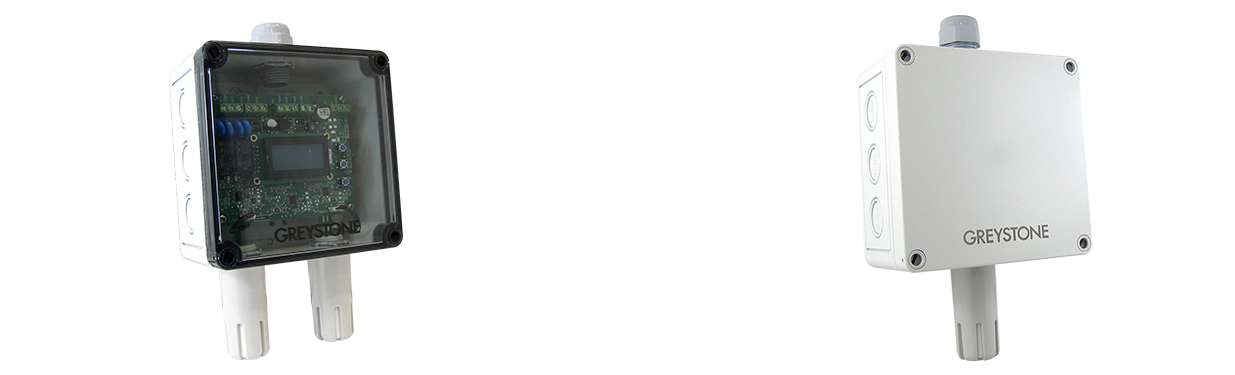
Greystone’s GH series of Greenhouse/Horticulture sensors are an excellent method of tracking CO2 levels within an indoor greenhouse environment. The GH series utilizes a highly accurate dual channel non-dispersive infrared (NDIR) sensor with a measurement range of 0-5,000 ppm and is available with temperature and humidity monitoring as well. All sensors are housed in field replaceable sensor pods. The GH series is available in either wall mount or suspension mount with cable winder that allows for suspension of the device from the ceiling of your facility to best monitor the environment. To learn more about our Greenhouse/Horticulture Sensor series click here.